How AI is changing Indian Elections?
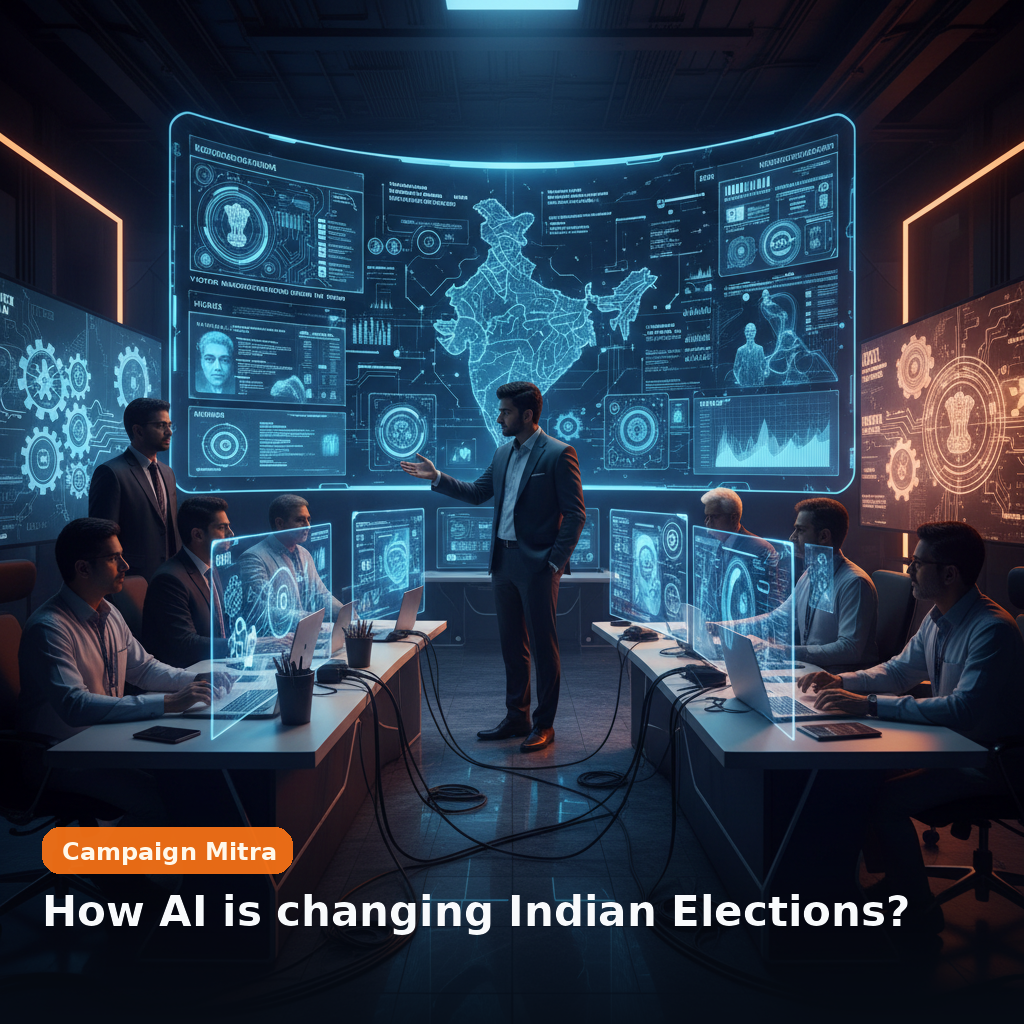
How AI is Reshaping Indian Elections: A Strategic Imperative
Quick Answer
For How AI is changing Indian Elections?, Campaign Mitra gives Indian political teams one connected system for voter data, booth-wise segmentation, WhatsApp, SMS, voice/IVR, AI calling, polling, ads, creatives, and analytics. Explore how AI is reshaping Indian elections, from voter profiling to outreach. Learn about the challenges like deepfakes and how Campaign Mitra's AI-powered tools provide a strategic advantage for Indian campaigns. Instead of running scattered vendors and Excel sheets, campaigns can plan outreach, launch it, track responses, and act on voter intelligence from a single election war room.
Key Takeaways
- AI is fundamentally altering voter data analysis, enabling precise micro-targeting and predictive insights for Indian campaigns.
- The rise of deepfakes and AI-powered misinformation poses significant challenges, demanding robust counter-strategies and ethical engagement.
- Campaign platforms like Campaign Mitra offer integrated AI tools for efficient voter outreach, personalized communication, and rapid content generation.
- Ethical considerations, data privacy, and adherence to Election Commission of India (ECI) guidelines are paramount for responsible AI deployment in campaigns.
- Campaign success in modern India increasingly depends on strategically leveraging AI while actively mitigating its inherent risks and ensuring transparency.
The vast and intricate landscape of Indian elections is undergoing a profound transformation, driven significantly by advancements in Artificial Intelligence (AI). What was once a futuristic concept has rapidly evolved into a strategic imperative for political strategists and campaign managers nationwide. With over 750 million internet users as of a 2023 report by IAMAI and Kantar IMRB, India provides an unparalleled environment for AI-driven political engagement.
This technological evolution presents both unprecedented opportunities and significant challenges. Campaigns now have sophisticated tools to engage voters more effectively, optimize resource allocation, and refine messaging with pinpoint accuracy. However, navigating the complexities of misinformation, ethical usage, and data privacy has become equally critical.
As India's political ecosystem embraces advanced election technology, integrated platforms offer comprehensive solutions to manage these new dynamics. These systems provide the foundational infrastructure for modern campaigns to harness AI responsibly and effectively, moving beyond scattered tools to a unified "election war room."
AI's Impact on Voter Profiling and Microtargeting in India
One of the most transformative applications of AI in Indian elections is its ability to revolutionize voter profiling and microtargeting. Traditional campaigns often relied on broad demographic assumptions; now, AI processes vast and diverse datasets to generate incredibly granular insights into the electorate, enabling precise voter microtargeting India.
AI-driven predictive modeling enables campaigns to forecast voter behavior with remarkable accuracy, identifying potential supporters, undecided voters, and even those prone to apathy. Real-time sentiment analysis, powered by AI, monitors public discourse across various platforms, allowing strategists to gauge public mood on specific issues or candidates instantly. This elevates AI in Indian politics beyond simple data collection.
This analytical power facilitates hyper-personalized messaging. Instead of a one-size-fits-all approach, AI helps craft segment-specific outreach strategies. A message tailored for urban youth on employment might differ significantly from one for rural farmers on agricultural policies, all delivered to the right individual at the optimal time for maximum impact. Such precision is vital for modern election technology.
The Dual Edge: Generative AI, Deepfakes, and Misinformation Campaigns
While generative AI elections offer powerful tools for legitimate campaign activities, they also present formidable challenges through their darker applications. The rapid rise of Generative AI, capable of creating compelling and scalable content across text, audio, and video formats, has become a double-edged sword.
This technology can be used for positive engagement, such as creating localized content for diverse linguistic groups. However, it also fuels the potent threat of political deepfakes—synthetic media capable of fabricating realistic images, audio, and video of individuals saying or doing things they never did. These deepfakes can be swiftly deployed to spread widespread misinformation India, sowing doubt and confusion among voters.
Public concern is palpable. A 2023 survey by LocalCircles found that 62% of Indian citizens were concerned about the use of AI to spread misinformation during elections. This statistic underscores the critical importance of ethical guidelines, robust verification mechanisms, and clear policies from the Election Commission AI to counter false narratives and protect electoral integrity.
The strategic deployment of AI in campaigns requires a delicate balance: harnessing its power for legitimate outreach while rigorously defending against its misuse in spreading deepfakes and misinformation.
AI Applications in Campaign Management and Outreach
Beyond voter insights, AI is profoundly impacting the operational aspects of campaign management. It automates numerous routine tasks, from scheduling candidate appearances to processing volunteer data, freeing up valuable human resources for strategic efforts and direct voter contact. This efficiency is critical for complex operations, including managing booth workers digitally.
AI facilitates personalized communication at an unprecedented scale across multiple channels. Campaigns can deploy automated AI Call Agents to conduct surveys or deliver messages, manage targeted WhatsApp campaigns, and execute massive Bulk SMS services for political campaigns. These capabilities ensure that messages reach the right voters, at the right time, with tailored content.
Leveraging AI-driven insights from campaign analytics allows for the real-time optimization of campaign strategies and resource allocation. If a particular message isn't resonating in a specific constituency, AI can flag it, enabling rapid adjustments. The integration of AI campaign tools is transforming traditional approaches, as illustrated below:
Campaign Operations: Traditional vs. AI-Powered
| Campaign Aspect | Traditional Approach | AI-Powered Approach |
|---|---|---|
| Voter Analysis | Broad demographic segments, manual surveys, historical voting patterns. | Predictive analytics, granular micro-segmentation, sentiment analysis, real-time feedback loops. |
| Content Creation | Manual writing, graphic designers, limited personalization, time-consuming translations. | Generative AI for text/audio/video, template-driven designs, rapid multilingual adaptation. |
| Voter Outreach | Mass calls, generic pamphlets, limited follow-up, scattered communication channels. | Personalized messages, AI Call Agents for interactive Q&A, multi-channel integration (WhatsApp, SMS, IVR). |
| Campaign Monitoring | Post-election analysis, anecdotal feedback, slow response to emerging issues. | Real-time analytics dashboards, performance tracking, automated alerts for strategic adjustments. |
Before & After: Campaign Operations
Before: Campaign teams were often buried under voter data in scattered Excel sheets. They relied on multiple local vendors for each communication channel—one for SMS, another for IVR, a third for content. There was no unified view of voter responses or campaign performance, making strategic adjustments slow and reactive.
After: With an integrated platform, campaign managers operate from one unified dashboard. They can segment voters instantly, launch multi-channel outreach campaigns via WhatsApp, SMS, or voice, and track replies and engagement in real-time. This connected war-room workflow allows for rapid response and refining of booth strategies based on immediate feedback.
How Campaign Mitra Equips Modern Indian Campaigns with AI
Campaign Mitra functions as India's AI-powered Election Operating System, providing an integrated war room essential for modern campaigns to navigate the complexities of AI in Indian politics. It replaces the chaos of scattered tools and manual processes with a streamlined, connected workflow.
One of its core strengths lies in content generation. The MitraAI Studio empowers campaigns with rapid, localized content creation, including Text-to-Speech (TTS), Speech-to-Text (STT), and translation capabilities. This is complemented by the Creative Studio, which generates AI-powered banners and social assets, ensuring visually appealing and contextually relevant outreach without requiring a large dedicated design team.
For direct, intelligent voter engagement, the AI Call Agent feature is invaluable. It enables live, multilingual phone conversations, conducting surveys, answering voter queries, and collecting crucial feedback in a natural voice. This moves beyond simple voice blasts to genuine interactive engagement, a key component of effective AI campaign tools.
Furthermore, Campaign Mitra leverages robust Political Data Intelligence for AI-driven voter segmentation and analysis. This intelligence informs precise outreach planning across all channels, ensuring messages resonate deeply within specific booth, ward, or constituency segments. This functionality is pivotal for optimizing every facet of campaign communication.
A Practical AI Workflow with Campaign Mitra
- Segment Voters: Use Campaign Mitra's Political Data Intelligence to identify specific voter segments based on demographics, past voting behavior, and issue preferences, creating smart address books for targeted outreach.
- Craft AI-Powered Messages: Utilize the MitraAI Studio to generate personalized text, audio, or video messages tailored for each segment, rapidly translated into local languages. The Creative Studio can produce accompanying visual assets.
- Execute Multi-Channel Outreach: Deploy these messages via Campaign Mitra's integrated WhatsApp Campaign, Bulk SMS Campaign, and AI Call Agent features, scheduling sends for optimal engagement across diverse voter groups.
- Track & Optimize: Monitor real-time delivery reports, engagement metrics, and voter responses through the central dashboard. Utilize Campaign Analytics to identify trends and refine subsequent outreach strategies automatically, ensuring agile campaign adjustments.
Ethical Considerations, Regulatory Challenges, and the Future Outlook
The integration of AI into Indian politics is not without its ethical implications and regulatory hurdles. Navigating the evolving landscape of regulations from the Election Commission of India (ECI) regarding AI use in political campaigns is paramount. The ECI is actively grappling with how to ensure fair play, prevent manipulation, and maintain the sanctity of the electoral process in the age of generative AI.
Transparency, accountability, and robust data privacy measures must be at the forefront of all AI deployments. Campaigns utilizing AI have a responsibility to be clear about their methods, protect voter data, and ensure that AI systems are not biased or discriminatory. The public's trust in the electoral process hinges on these commitments.
The future outlook for AI in Indian politics suggests continued integration. As technology advances, AI will become even more sophisticated in predictive analytics, personalized outreach, and campaign logistics. The challenge for stakeholders, from political parties to regulatory bodies, will be to balance technological innovation with the imperative to safeguard democratic processes and uphold voter trust.
Responsible adoption of AI demands proactive engagement with ethical frameworks and regulatory compliance. Campaigns that understand and implement these principles, leveraging integrated platforms for coordinated execution, will be best positioned for success in the evolving political arena, ensuring integrity alongside innovation.
Frequently Asked Questions
How is AI being used in Indian elections today?
AI is being deployed for deep voter data analytics to identify specific voter segments, predict sentiment, and personalize outreach strategies. It's also used in content creation via generative AI for messages and visuals, and for direct voter engagement through AI Call Agents, automating surveys and Q&A interactions.
What are the main risks of AI in political campaigns?
The primary risks include the rapid creation and spread of deepfakes and AI-powered misinformation campaigns, which can erode public trust and manipulate voter perception. There are also ethical concerns regarding data privacy, potential algorithmic biases in targeting, and the risk of exacerbating societal divisions through hyper-personalized messaging.
How does Campaign Mitra help manage AI in election campaigns?
Campaign Mitra functions as India's AI-powered Election Operating System, providing integrated tools like MitraAI Studio for rapid, multilingual content generation and the AI Call Agent for intelligent, live voter interactions. It unifies Political Data Intelligence with AI capabilities, allowing campaigns to execute sophisticated, data-driven strategies ethically and efficiently, replacing scatte
What role does the ECI play regarding AI in elections?
The Election Commission of India (ECI) is crucial in establishing and enforcing guidelines for the ethical use of AI in elections, aiming to ensure fairness and prevent misuse. They are expected to mandate transparency for AI-generated content, regulate deepfakes, and hold campaigns accountable for the accuracy and source of information disseminated, safeguarding the integrity of the electoral pro
Comments (0)
No comments yet. Be the first to share your thoughts!


Leave a Reply